Friday, November 12, 2021

Abbreviated Lesson Plan - Making Connections with "Jorge the Church Janitor Finally Quits"

"Jorge the Church Janitor Finally Quits" - Using Up-Down-Both-Why

Objective

  • Students will describe their reactions to "Jorge the Church Janitor Finally Quits" through their reading and discussion of the text, making personal connections and using evidence from the text to supplement their interpretation. 

CCSS

  • CCSS.ELA-Literacy.RL.11-12.4 - Determine the meaning of words and phrases as they are used in the text, including figurative and connotative meanings; analyze the impact of specific word choices on meaning and tone, including words with multiple meanings or language that is particularly fresh, engaging, or beautiful.
    • I selected this standard because students are making connections to the poem that they are reading, and they will be marking certain words/phrases that illuminate or inform their connections to the text.

Activities

  • Step 1: Quick Write Activator 
    • Prompt: Think of a time where you felt invisible in a room full of people. Reflect on what that experience was like, along with how it felt. Perhaps it felt isolating and like you were not seen at all. Alternatively, consider a time where you felt judged in a room full of people who did not really know you. Reflect on what that experience was like and the emotions that came with it. 
    • Students will write for 8 minutes and then will be invited to share for a couple of minutes through a turn-and-talk before coming back together. 
  • Step 2: Reading the Poem
    • The teacher reads the poem aloud while students close their eyes and listen. They will not actively be reading their own copy yet. 
      • After reading, students will be asked, what is your reaction to hearing that poem? What stuck out to you? 
    • Then, each student will get their own copy of the poem to read along with. The poem will be read again, this time with students reading their copy, too. 
      • A class discussion will follow. What are your reactions on the second reading? How do you feel? Do you think the speaker is having a positive experience? Or is it a negative experience? Or is it somewhere in the middle? 
      • Is the speaker sympathetic, or is he unsympathetic? Why? What gives you the impression that you have?
      • Impressions/thoughts will be put on a Jamboard
  • Step 3: Marking the Text with a Partner
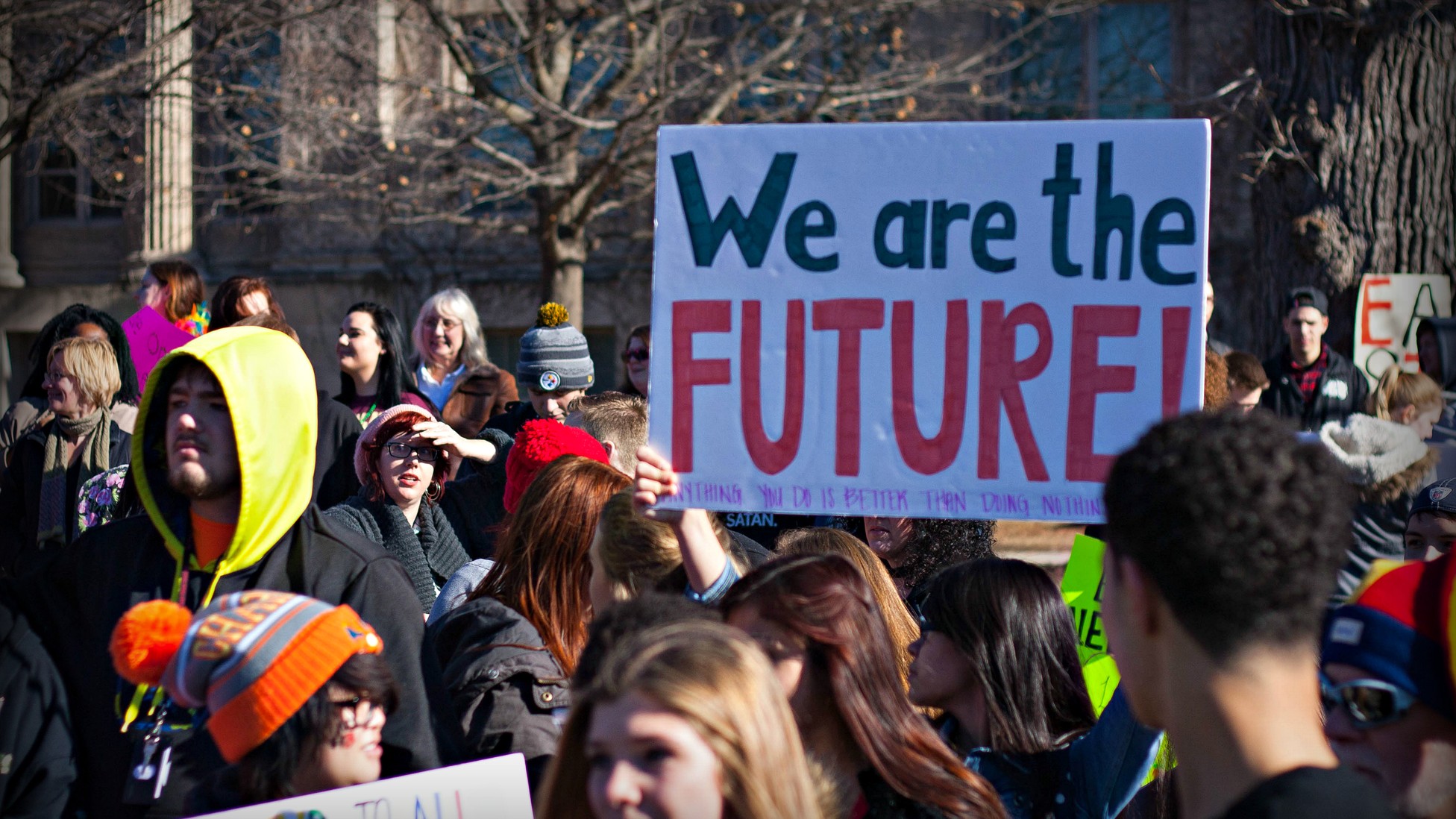
    • Image Source
      Students will break into pairs, rereading the poem and marking the text according to their reactions. They will mark an "S" for moments where they sympathize with the speaker, also highlighting the line that corresponds to the note. They will mark "P" and "N" as well, for positive or negative experiences. They are also invited to write marginal notes that expand on their marks.
    • They will talk with their partner, negotiating where there may be disagreements, explaining their points of view to one another, and having general conversations about their experiences with the text. 
    • We'll come back together as a class to talk about these reactions and where in the text they take place. We'll be actively examining the "why" -- what triggers these responses to the text? What words or phrases did you identify as indicating a positive or negative experience? Why do you think that is? 
  • Step 4: Letting it Simmer (Assessment)
    • Students will do a short response based on what we've spoken about during class, and it will be collected and used as a formative assessment. After having a couple of discussions about the text and their reactions to the text, students will revisit their earlier quick write responses and see if/where they can relate to Jorge and the experiences that he describes. Student will be asked to talk about their reaction to the poem, making particular connections to themselves, the text, and the world. 

Assessment

  • Formative Assessment - short written response
    • Students will be asked to write a short response toward the end of the lesson. 
    • Prompt: Write about how you connect to Jorge throughout this poem. Consider the response that you wrote for the quick write, along with the conversations you've had with your partner and the text marking that you've done. If you feel disconnected, you could make connections between the experiences of others and the text--think about text-to-world. This is about making connections--where can you find connections based on your experiences reading this text? Use specific examples from the text as you make connections. 
    • This response will be collected so that I can see student reactions to the text and see where they are making connections between themselves and the text. It also
      shows me how they engage with the text (what lines they find impactful or especially relatable, where there is disconnect, etc.). The assessment also directly connects to the objective, as students are utilizing their thoughts from the discussion and reading that we've done to make personal connections to the text. 

Rationale

Through using the up-down-both-why approach, my hope is that students can make connections to the text and their own experiences, and then zoom out to examine these connections in the wider world. With the quick write activator, the intention is for students to begin considering their own experiences with invisibility and unearned judgement. With the first reading of the text, we will focus on the up-down-both-why method of thinking about the poem, and with the conversation and Jamboard, they allow students the space to discuss their responses as readers without finding the "right" answer in the text. The marking text exercise with a partner helps students to go one step further, connecting their reader responses with textual evidence. They will identify places where they had particular responses, and it allows students to examine the why and anchor it in the text. With this particular activity, I think it works because it invites and validates student reactions to the text through grounding their reactions in the text. Students also work with a partner, and there may be some negotiation that takes place where one partner felt one way during a stanza and the other partner felt differently--they can talk about their reactions and experiences to the same chunk of text. The assessment brings the earlier quick-write into play, so students are working with personal experience as they also consider their engagement with the text itself. There is also an option to make connections between the text and real-world experiences that may not be the student's own lived experience, and that option is there in case students have trouble making explicit personal connections. 

Wednesday, October 6, 2021

Culturally Responsive Teaching & ELA

Honestly, up until this point, "culturally responsive teaching" has been a vague and somewhat elusive term that I've heard, and it never had a concrete meaning for me. I will admit to thinking about the "fruits" of culture instead of the "roots" (Hammond 24-25). After reading these two chapters of Culturally Responsive Teaching and the Brain, I feel like I have a better understanding of what CRT actually should be. 

Hammond specifically talks about different "roots" of culture that students have and how that informs their worldviews and how they interact with the world around them. Thinking in terms of ELA, this tells me that students may react differently to different text that we read based on their worldview. When reading The Grapes of Wrath, for example, students may react very differently to the different character choices throughout the novel based on their worldview about collectivism or individualism. We've spoken about how students will react differently to texts based on their experiences, and this is the first time where I've heard it explicitly in the context of culturally responsive teaching.


Thinking about how we "do" ELA, CRT has many implications that disrupt the "usual" way of doing ELA. When considering this prompt, I started thinking about the New Critics of the mid-twentieth century and how those kinds of readings can still happen in the classroom, which means that students look at the text all on its own with little to no consideration for context or historicization. (Aesthetic Confusion: The Legacy of New Criticism is another worthwhile read if you have the time!) CRT completely challenges this because context matters. Students are bringing different cultural contexts into the classroom, and we need to be aware of them when engaging with a text. Students will (or will not) derive meaning from text based on their understanding of how the world works (or should work). Instead of looking at a text as an isolated piece to be picked apart on its own, CRT invites students to take context and apply it to their understanding of the text. 

In the most basic way, CRT helps students to connect to and understand a text. CRT allows students an entry point into a text, if that makes sense, so they can engage with it and make meaning from it. As an ELA teacher, I need to be aware and alert about how I am approaching teaching texts in the classroom. In the first article that I linked above, the author talks about reading a poem with students and asking them to visualize what the poet describes, and students come up with many different images because how they envision and interpret the poem varies--to me, this is the biggest takeaway from CRT. I can't assume that because I picture a poem one way or interpret the action of a character one way that my students, who have different contextual understandings than I do, see it the same way. 

I do worry about what a scripted/"canned" curriculum looks like and how that could impact bringing CRT into my classroom. I haven't seen one yet, but I do worry that it focuses more on the text itself instead of contextualizing it and connecting it to students' understandings. I'm not sure what other people have seen or experienced, so if you have any insights, please do share!

Wednesday, September 29, 2021

Historically Responsive Literacy & ELA

First, last semester I had the wonderful opportunity to watch the talk with Dr. Gholdy Muhammad, Bettina Love, and Dena Simmons that the podcast host mentions, and it was eye-opening (if you haven't watched/listen to it already, I highly recommend it!). Knowing that this podcast featured Dr. Muhammad, I was so excited to hear what she had to say!


Looking at Dr. Muhammad’s critique of the education system, she is concerned with the Euro-centricity and whiteness of the system. As she says, “the systems, the structures, the standards, the curriculum, the teacher evaluations, the assessments were never designed fully with black and brown students in mind” (Muhammad 12:00). The system that’s been built isn’t designed for students of color, and the racism that’s within the structure of the system hasn’t been removed.  Instead, there have been things like adversity scores and other initiatives that, while they can be helpful, are band-aid fixes. These band-aids are not solving the systemic and structural issues within schools that advantage white students while disadvantaging students of color. 


Dr. Muhammad grounds her framework in the historical practices of black literary societies of the 18th and 19th centuries. These societies valued literacy and saw that “literacy was synonymous with education” (21:00). With their education, they focused on “reading and writing and thinking and speaking, listening, debating” along with “mathematics, their science, their history, and their language learning” (22:00). Dr. Muhammad places her framework in the larger conversations around culturally responsive educational practices and beliefs. While her framework works within the larger culturally responsive sphere, she focuses on the historical and making a “practical model to the theory” (25:00). 


Looking at each layer, there are many opportunities to make direct connections to ELA. Beginning with identity, Dr. Muhammad says that student identities should be “affirmed” in the classroom. Texts can be a great place to affirm student identities, and introducing texts where the protagonists have relatable identities or experiences to students could be a great opportunity to begin working on that identity piece. Using The Poet X, for example, with Latinx students could be highly impactful, as they have the opportunity to see themselves on the page and read about the experiences of someone like them. If students don’t identify themselves within the novel, it is still an opportunity to learn about others. Writing activities can also be affirming for student identities, especially if they are asked to write about their experiences that are closely connected to their identities. With this layer, students should have representation of their identities in the classroom, as this kind of representation is helpful in learning about not only themselves but others, too, in a genuine way. Students will be able to be more compassionate and there are opportunities to break stereotypes and harmful biases that students may hold about others. Affirming their own identities while learning about the identities of others can happen in the ELA classroom, and it is just one layer of Dr. Muhammad’s framework. 


Image Source
Speaking about the skills layer, Dr. Muhammad says that it becomes problematic when all we focus on is skills. Instead, she sees skills acting in conjunction with the other layers because “We want students to be able to do both, as they say, read the word and read the world” (44:00). With this in mind, I think a writing assignment where students write a narrative about an event in their life could be a great opportunity to focus on both identity and skills. There can be a specific component where students must include certain facets of a narrative within their writing, and this widens the focus to identity and skill-building. 


With the intellect layer, Dr. Muhammad proposes that “intellectualism is when you do something with… knowledge,” and it’s important to treat “young people as if they are scholars and intellectuals and thinkers” (46:00, 47:00). This is an important piece, especially because it feels like this can be lacking sometimes. When students are treated as intellectuals, as thinkers who are contributing and co-constructing knowledge, then they become agents of their own education and they are active in seeking and constructing knowledge. With particular activities, I think a Socratic seminar can be a great place in ELA to have students practice intellectualism. In the seminar, they can come with some prepared notes and the text or topic that we are discussing, and this is their chance to speak their minds and be heard. They are also able to actively listen and hear others, and it all works to create a community of learners. With Socratic seminars, too, they offer a space for students to be brave, and if they stumble, they are in an environment where stumbling is a learning experience. 


The final layer is criticality, and this is the major social justice piece of Dr. Muhammad’s framework. As Dr. Muhammad sees it, “criticality is deep and analytical thinking to understand power, equity, anti-racism and other other anti-oppressions” (52:00). ELA classrooms are uniquely positioned, I think, when it comes to having conversations centered around social justice because we have access to texts as ways to stimulate conversation, along with writing. Thinking about how criticality would be present in an ELA classroom, reading texts can be powerful. I can bring in a text that deals with structural racism, for example, and while reading the text, we can talk about how power and inequality are functioning in the text. With this discussion, we can practice making text-to-self and text-to-world connections where students can talk about issues of power, inequality, and inequity in society, and we can discuss how these problems can be addressed. 


Image Source
Of course, as Dr. Muhammad says, all of these layers are equally important, so when utilizing her framework, one layer cannot be taken out or ignored; all of it works together so that students become critically aware and are able to practice criticality in their lives. An educator who uses Dr. Muhammad's framework centers student experience and voice, reading texts that represent students and help them learn about others. An educator creates a community of learners that believes that each student is a thinker and an intellectual. This community of learners, then, critically examines the world around them, discussing issues of power and oppression. With this framework, though, it isn't just contained in a single unit of study. There are classrooms that are centered on social justice and activism, which are interesting to read about. This can extend to ELA where an educator centers Muhammad's framework to help students develop agency and approach ELA in a different and impactful way.


Note: I used approximate times to cite the particular quotes that I pulled from the podcast. 

Wednesday, September 22, 2021

Baldwin, BLM, and ELA

In watching this film, I found myself stunned at several points. I know that's an odd descriptor to choose, but hear me out. Much of what Baldwin talked about (or, Baldwin through Samuel L. Jackson) were concepts that I already knew about. However, there is a big difference between knowing and understanding, and this film helped me to make new understandings and has left me with much to think about. I will focus specifically on two points from the film that resonated strongly with me and really made me think about my positioning. 

In the film, Baldwin and other speakers talk about the need for white people to see and understand that structural racism exists and that they can be part of the problem. Speaking from my own experience, I know that I didn't question how power structures in society existed and operated for a long time. It really wasn't until I entered college that I learned about power structures in today's society and how they impact different people. For me, it's been an ongoing process of reflecting on my own positioning and how I am advantaged in society by my whiteness, and I am trying incredibly hard to educate myself on the structures that exist and what I can do to help challenge and dismantle them. In the film, Baldwin says that when you assert your “right to be here, you have attacked the entire power structure of the western world.” In Baldwin’s context, he’s talking about Black people asserting their right to exist, and this relates to structural racism in society. It’s pervasive and in a way, to question it is to challenge the power structures that have existed for centuries. To examine the power structure is one thing, but to stand up and challenge it and attempt to dismantle it is quite another task. Power and racial oppression are deeply connected, and hearing Baldwin talk about the power structures and the significance of standing up to them as a Black man made me consider my own positioning when talking about and challenging power structures.

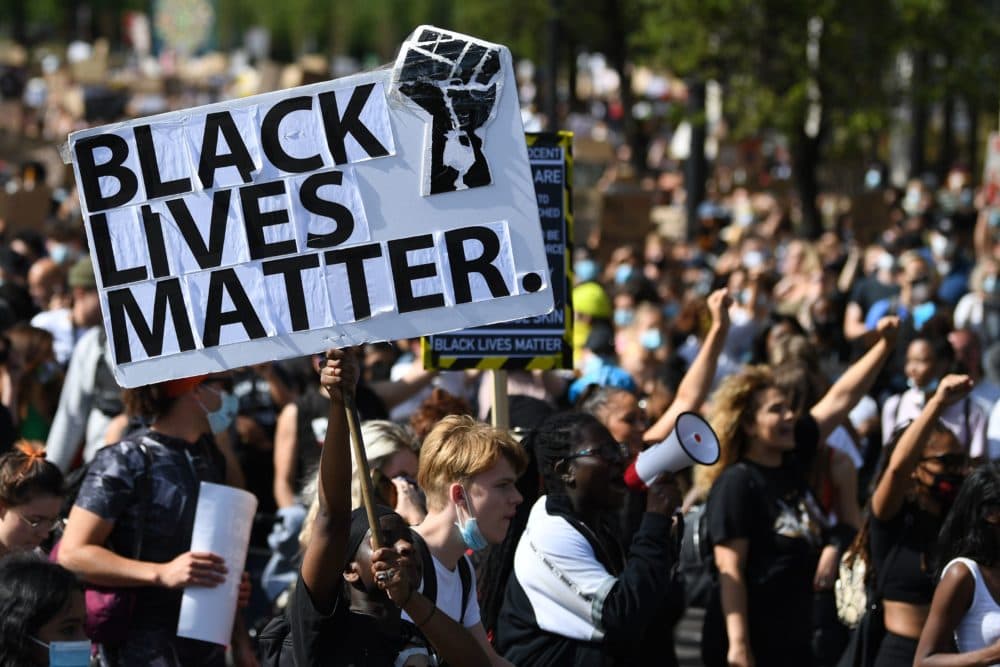
Image Source
This connects to another quote in the film where Baldwin says, "When any white man in the world says 'give me liberty or give me death,' the entire white world applauds. When a Black man says the exact same thing, word for word, he is judged a criminal and treated like one, and everything possible is done to make an example" of him. This quote stood out to me because of how striking and horrifyingly true it is. Thinking about current events with Black Lives Matter and protests surrounding structural racism and discrimination, it feels like what Baldwin is talking about here is extremely relevant. These are basic human rights that are being denied in society, and Black people are still oppressed. While doing some research on the BLM protests, I stumbled on this article from just a few weeks ago that talks about "the deployment of federal agents and prosecution of protesters" during BLM protests. The article explains a report that talks about these targeting techniques as a way to thwart protests.  I feel like this quote, then, becomes incredibly relevant and important as we talk about ongoing Black Lives Matter protests and the increasing urgency with which we need to address structural racism. 

With an ELA class, we can have these conversations about power structures and oppressive forces. Students are aware of current events, and articles that talk about protests and movements like BLM can be brought into the classroom and can be a gateway to larger discussions of structural racism. There are many different texts that could be used to spark conversations, but writing could also be a powerful tool when it comes to talking about structural racism. Students can write about their experiences, whether they've been impacted by structural racism or if they've been advantaged by structural racism, and these writings and thoughts can help lead discussions about what we can do to dismantle structural racism. 

Wednesday, September 15, 2021

Crumbling Buildings as an Avenue for Critical Literacy

When considering my own neighborhood, its landscape has changed as I have grown up, and that change was largely attributed to the district’s schools. When I started elementary school, Warwick was in the process of consolidating schools, closing elementaries before moving onto closing junior high and high schools. With those consolidations, the boundaries for schools were redrawn, and who went where became an important subject. Older schools were closed, but the schools that were kept open were not necessarily better--Warwick school buildings have not been taken care of well. In the article “Critical Literacy Finds a ‘Place’,” Comber and Thomson say that “students were learning to do much more than voice an opinion; they were learning to go deeper into an urgent local and school issue” (460). This made me think about the pandemic and how that has produced many urgent issues locally, and I was reminded of Warwick’s school buildings and the issues with infrastructure that were brought to light during the pandemic. Just this past month, Sherman Elementary School had to start online and the school is closed for a few months because of a newly-discovered mold problem. Considering these issues, particularly those of crumbling school buildings, I would create a project for my high school students that would revolve around looking at the state of their school buildings and coming up with ways to improve these buildings. 


Pilgrim High School, on one "side of the city"
There are some stark socioeconomic differences depending on where you live in the city, and this spills over into the perception that some schools are “better” than others because of the “side of the city” that they are on. This perception still exists, and I would have my high school students interrogate this perception. All of the school buildings have issues because they haven’t been properly maintained, and this is a fantastic opportunity for students to examine and question larger,
community-wide issues concerning the school system. 


With this project, we will first talk about what students think about the state of the school buildings without having done any research or “Googling” ahead of time. These thoughts will help guide students’ thinking throughout the project, and these perceptions would also help guide me as I further develop the project. Then, students will go out to a few elementary, middle, and high schools all around the city, noting what they see (or what they don't see) in the physical building. After this walk-through, we will reconvene and discuss what they noted. From these notes, students will come up with questions or concerns that they have about the state of the buildings, which will live on a class-wide Jamboard. For example, a student notices that there are stained ceiling tiles all over their old elementary school, so they come up with the questions, “Is there an issue with the roof? Has it been assessed? If not, why?” Once they have their question(s), then students will be able to research their questions, utilizing local news sources and databases, including looking at recent bond projects and ballot questions. Through these channels, some students may find satisfactory answers, and others may not. For unresolved questions, we will come together as a class to figure out where we could find answers to these questions while also discussing why we can’t seem to find straightforward answers. 


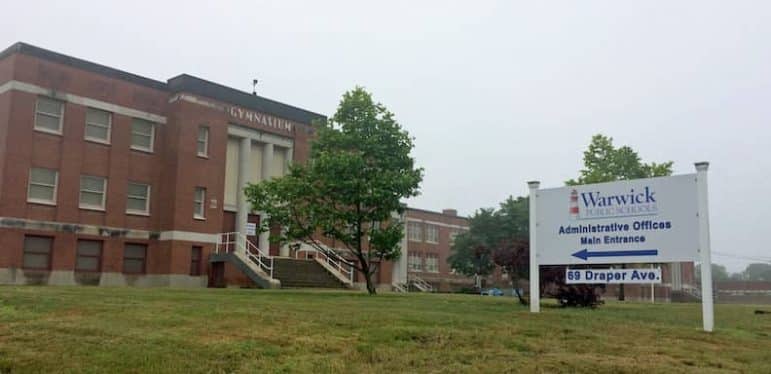
Warwick Schools Administration Building

For these unresolved questions, students will contact local officials who may have answers, including the school district administration, School Committee, and City Council. I would help them to get in contact with these officials, and we would work to craft emails or phone call scripts that students can then use when contacting officials. Students will be invited to speak with the adult(s) that they live with about these issues. Involving all of these stakeholders helps students take power into their hands, and students are bringing their concerns to the whole community. In concert with all of these community members and local officials, students will hopefully have the chance to be involved in making positive changes to the buildings. They have the opportunity for their voices to be heard and for their ideas to be considered. They get to be involved with positive, community-wide change. 


Looking at school buildings may sound a bit strange, but they reflect how the schools have been valued for years. Students have to enter these buildings each and every day, and they should feel like they can help to improve these spaces that they are spending their formative years in. Students often feel like they don’t have a say in school matters, especially when it comes to multi-million dollar renovations, but the reality is that they do have a say. This project would help them to develop and utilize critical literacy skills to amplify their voices to help better the facilities in which they learn, not just for themselves, but for those who come after them.

Abbreviated Lesson Plan - Making Connections with "Jorge the Church Janitor Finally Quits"

"Jorge the Church Janitor Finally Quits" - Using  Up-Down-Both-Why Objective Students will describe their reactions to "Jorge...