In watching this film, I found myself stunned at several points. I know that's an odd descriptor to choose, but hear me out. Much of what Baldwin talked about (or, Baldwin through Samuel L. Jackson) were concepts that I already knew about. However, there is a big difference between knowing and understanding, and this film helped me to make new understandings and has left me with much to think about. I will focus specifically on two points from the film that resonated strongly with me and really made me think about my positioning.
In the film, Baldwin and other speakers talk about the need for white people to see and understand that structural racism exists and that they can be part of the problem. Speaking from my own experience, I know that I didn't question how power structures in society existed and operated for a long time. It really wasn't until I entered college that I learned about power structures in today's society and how they impact different people. For me, it's been an ongoing process of reflecting on my own positioning and how I am advantaged in society by my whiteness, and I am trying incredibly hard to educate myself on the structures that exist and what I can do to help challenge and dismantle them. In the film, Baldwin says that when you assert your “right to be here, you have attacked the entire power structure of the western world.” In Baldwin’s context, he’s talking about Black people asserting their right to exist, and this relates to structural racism in society. It’s pervasive and in a way, to question it is to challenge the power structures that have existed for centuries. To examine the power structure is one thing, but to stand up and challenge it and attempt to dismantle it is quite another task. Power and racial oppression are deeply connected, and hearing Baldwin talk about the power structures and the significance of standing up to them as a Black man made me consider my own positioning when talking about and challenging power structures.
 |
| Image Source |
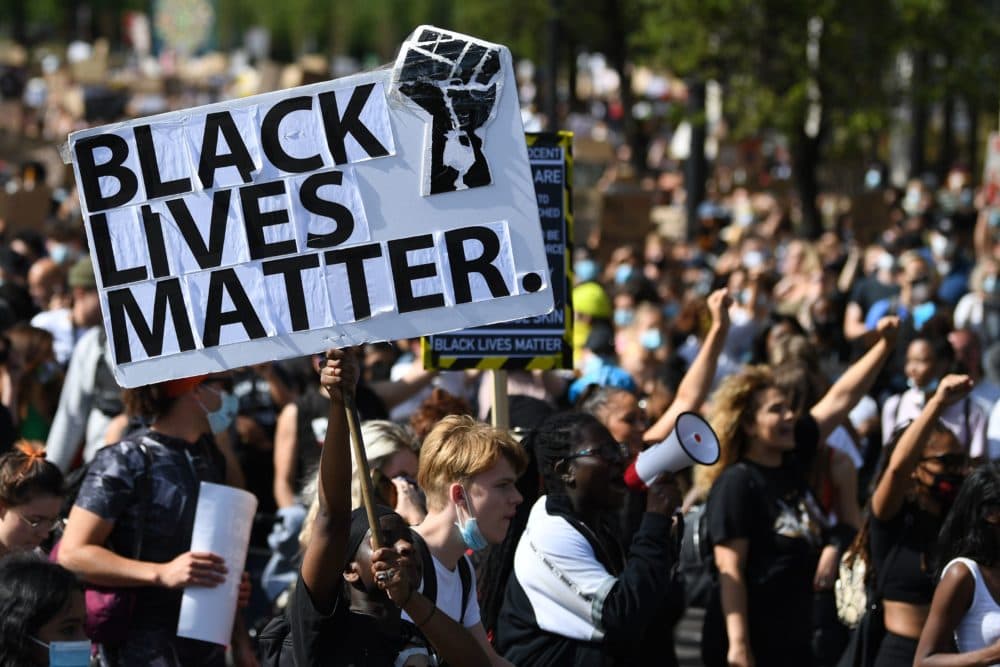
With an ELA class, we can have these conversations about power structures and oppressive forces. Students are aware of current events, and articles that talk about protests and movements like BLM can be brought into the classroom and can be a gateway to larger discussions of structural racism. There are many different texts that could be used to spark conversations, but writing could also be a powerful tool when it comes to talking about structural racism. Students can write about their experiences, whether they've been impacted by structural racism or if they've been advantaged by structural racism, and these writings and thoughts can help lead discussions about what we can do to dismantle structural racism.


Hi Georgia,
ReplyDeleteIn the third paragraph you quoted Baldwin talking about the difference between a white and a black man saying, “give me liberty or give me death,” and I was immediately reminded of a scenario that we discussed in class. It reminded me of the conversation we had of a white student and student of color both breaking the same rule, but only the students of color getting caught for it and receiving the consequences. Both scenarios are surrounded by the idea that it is engrained in society that people of color should be treated differently and the preconceived notion that they will always break the rules. The fact that Baldwin said this quote decades ago and the situation of different expectations based on race is still occurring in schools today is just proof of systematic and institutional racism, yet some people still do not believe that it exists. What do you think we can do to prove to people that systematic and institutional racism does exist? How can we prove to them that it needs to be fixed?
Hi Megan,
DeleteI appreciate your questions, though I don't think I have a quick response for them! Ultimately, I think it comes down to having conversations with people and educating them as much as possible. As we spoke about in class, it can be tough to talk about racism, but at the same time, nothing will change if we don’t talk about it. Even if it’s a conversation at the dinner table, it’s an opportunity to educate others and help them understand the racist structures and systems in place. Once they understand that structural racism exists, then the work of dismantling the systems can begin.
Hi Georgia,
ReplyDeleteThe last part reminded me of the narrative assignments that we had in SED 445. We can use what we learned in that class to create an effective writing assignment for the students that relate to the movie and to structural racism. Something along the lines of inviting them to write a narrative of their own run in with structural, systemic, or just plain general racism. As a final project they can narrate their own writing and create a short movie with images representing their narrative, much like what "I am not your negro" did. That sounds cool to me but I don't know about you haha!
Hi Krissy,
DeleteI love this idea! I was definitely thinking about the narrative assignments that we did in SED 445, and I really like the idea of extending it out to creating a movie. In representing the stories that they tell, students are in control of how it is all framed, both narratively and visually.
I think Baldwin's words are a great connection to the BLM movement. It would be interesting for students to connect Baldwin's ideas to what they see in society. I could see a larger project stemming from this that focuses on power structures and oppression that ties in Baldwin's works and current social injustices students see daily. I think this can go into a larger lesson on privilege and forces students to evaluate and reflect on their privilege. If students have experienced structural racism first hand, they can reflect on how institutions target them. If students have never experienced structural racism or being, they can reflect on their privilege and how they are favored by the same institutions that try to knock their peers down. It is always beneficial for students to evaluate their privilege, and it would be helpful if we as teachers showed vulnerability to out students and reflected on ours as well.
ReplyDeleteHi Sam,
DeleteI like this idea! Giving students a space to reflect on their experiences and how their experiences are tied to advantage/disadvantage is important, as is talking about and troubling the structures and institutions that uphold racism and inequality. Also, it’s important to create a classroom environment and culture where students feel safe and brave enough to have these conversations.